
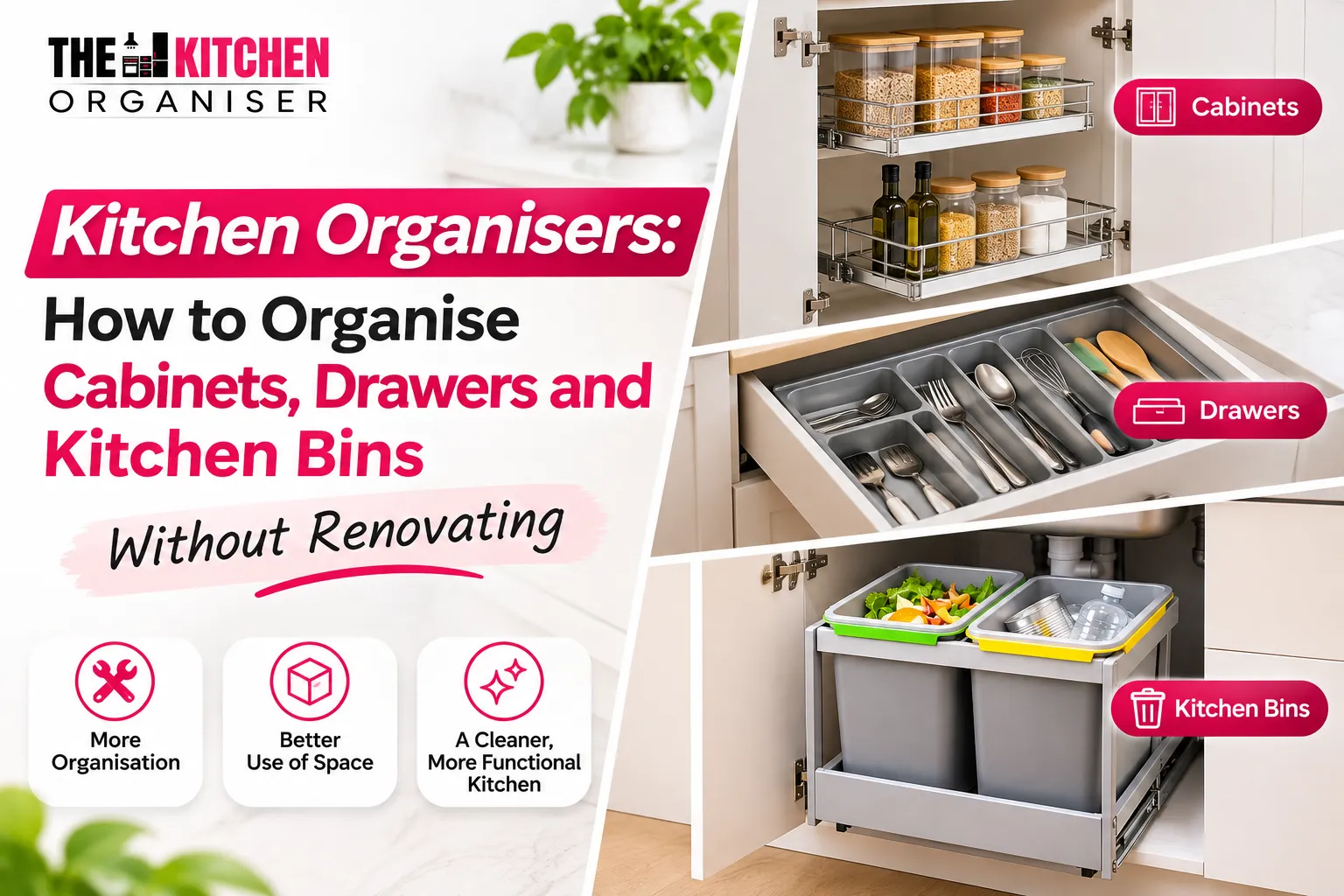
A cluttered kitchen rarely needs new cabinetry. Usually the cupboards are fine and the space inside them is badly used: deep shelves where things vanish at the back, a utensil drawer that jams, and a bin taking up floor space in the busiest part of the room. The right kitchen organisers fix those problems inside the cabinets you already have. A kitchen drawer organiser stops utensils sliding around, pull-out fittings bring the back of a cupboard to you, and concealed kitchen bins clear the floor. Here’s how to do it, cupboard by cupboard.
Why Do Kitchen Cabinets and Drawers Get Cluttered?
Cabinets and drawers get cluttered when everyday items are stored in hard-to-reach places, rarely used items take up prime space, and drawers have no dividers. Clutter builds slowly, so most kitchens end up crowded long before they are actually out of room.
The usual culprits:
-
Rarely used appliances and duplicate utensils taking up front-row space.
-
Deep base cupboards where anything behind the first row is out of sight.
-
Cutlery, utensils and gadgets mixed in one drawer.
-
Empty vertical space above short items on each shelf.
-
A freestanding bin with no proper home.
Work out which of these frustrates you most before buying anything.
How Do You Organise Kitchen Cabinets Without Renovating?
Start by decluttering, then add pull-out fittings to deep or awkward cupboards, and finally group items into zones based on where you use them. None of these steps involves changing the cabinets themselves.
1. Declutter One Cabinet at a Time
Empty a single cupboard and sort everything into three piles: used weekly, used occasionally and not needed. Keep the weekly items between hip and shoulder height. Move seasonal appliances and special-occasion platters to high or hard-to-reach cupboards, and donate the rest.
2. Add Pull-Out Storage to Deep Cupboards
Pull-out units slide the whole contents of a cupboard forward, so nothing gets lost at the back. They are made to suit standard Australian cabinet widths:
-
150–200 mm gaps: slim pull-outs for oils, spices and cleaning bottles.
-
300–450 mm cabinets: pull-out baskets, or a pull-out pantry such as the Hettich Lario range.
-
Corner cabinets: a corner pull-out or carousel brings blind-corner space into reach.
Measure the internal width, depth and height first, and allow for hinges and the cabinet’s side panels. Retrofit fittings are sized to the internal space, not the cabinet’s outside size.
3. Group Items into Zones
Store things where you use them. Keep oils, spices and chopping boards beside the prep area, plates near the dishwasher, pots near the cooktop and cleaning products under the sink. Put heavy cookware on low, sturdy shelves and light items up high.
What Is the Best Way to Organise Kitchen Drawers?
The best way to organise kitchen drawers is to give each drawer one job and fit a kitchen drawer organiser so items stay in place. Adjustable dividers suit drawers with utensils of mixed sizes.
Use a Kitchen Drawer Organiser
Without dividers, utensils shift every time the drawer opens. A kitchen drawer organiser, whether a cutlery tray, an adjustable insert or a set of dividers, gives every item a fixed spot. Measure the drawer’s internal width and depth and choose an insert that fills it. Leaving gaps around the edges lets the insert slide around too.
Give Each Drawer a Purpose
|
Drawer |
What to store |
|
Top drawer |
Cutlery and everyday utensils |
|
Second drawer |
Cooking tools, peelers, measuring cups |
|
Deep bottom drawer |
Pots, pans and storage containers |
|
Drawer nearest the sink |
Tea towels, foil, wraps and bin liners |
Adjust this to suit how you cook.
Don’t Overfill
A full drawer is just as hard to use as a messy one. Leave space for each item to come out without dragging others with it, keep tall utensils from catching on the drawer above, and stay within the runner’s weight rating for heavy pots.
How Do Kitchen Bins Help Organise a Kitchen?
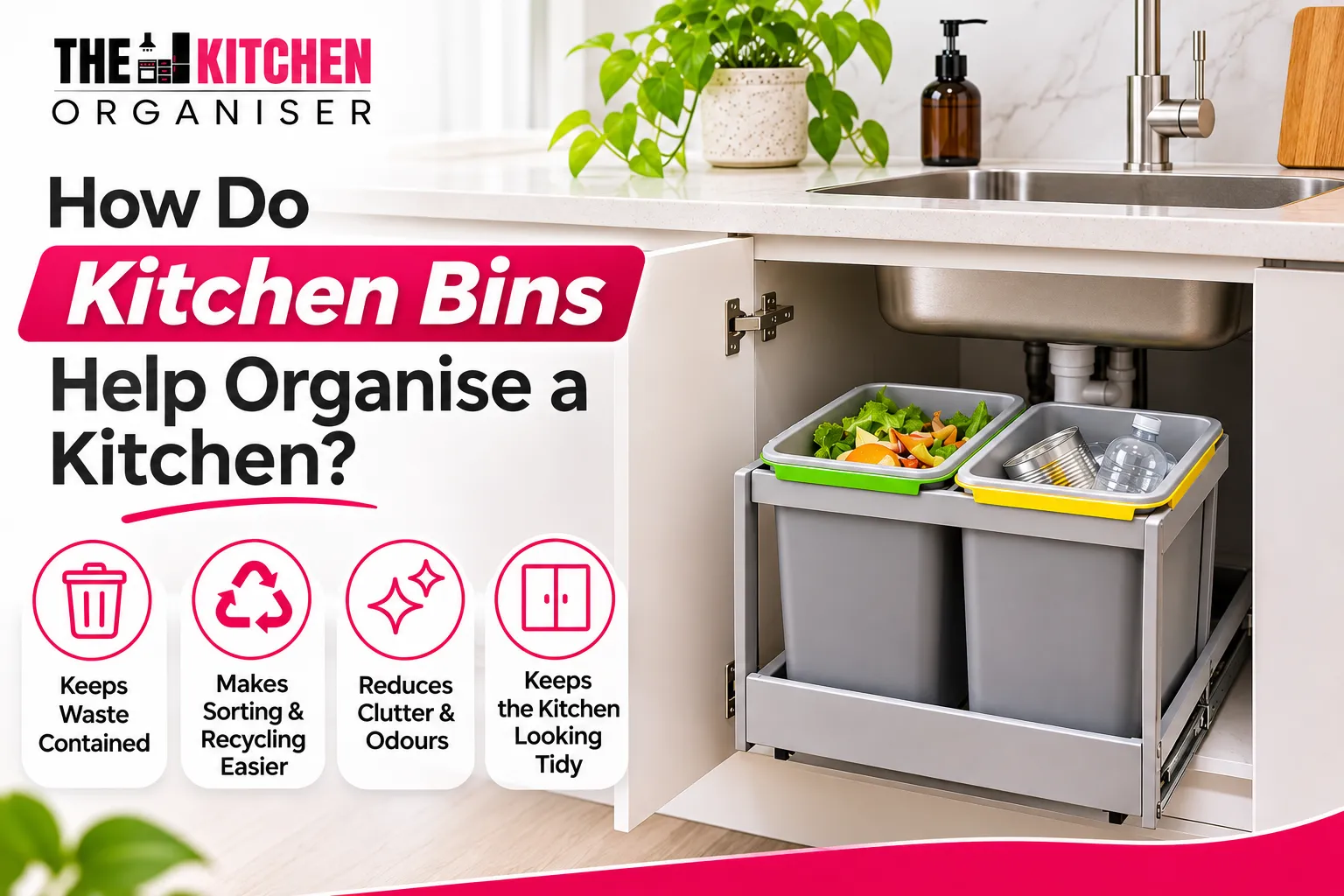
Concealed kitchen bins move rubbish off the floor and into a cabinet, which frees up walking space and keeps the prep area clear. A double bin also makes it easy to separate general waste from recycling.
Choose the style that suits your cabinet:
-
Pull-out bins: slide forward on runners and suit 300–600 mm base cabinets.
-
Door-mounted bins: swing out with the door, which suits narrow or pipe-crowded cupboards.
-
Under-sink bins: use the space beside the plumbing that usually goes to waste.
-
Double or triple bins: separate buckets for rubbish, recycling and, where your council collects it, FOGO (food organics and garden organics).
Brands such as Wesco and Kia Ora make kitchen bins in a range of sizes, from compact singles to 60-litre-plus doubles. Before you buy, check the internal cabinet dimensions, the door clearance and where the pipes sit, and make sure the buckets lift out easily for cleaning.
How Do You Make the Most of a Small Kitchen?
In a small kitchen, focus on easier access rather than more containers. Use the vertical space on each shelf, make corner cupboards reachable and keep benchtops clear.
-
Use the height: shelf risers and stackable containers fill the space above short items.
-
Fix the corners: a corner fitting beats crawling into a blind corner.
-
Clear the benchtop: leave out only the appliances you use daily.
What Kitchen Organisation Mistakes Should You Avoid?
The most common mistakes are skipping measurements, buying containers with no clear purpose and overloading shelves.
-
Not measuring: fittings must clear hinges, plumbing and drawer runners.
-
Buying too much: extra containers take up space if they don’t solve a specific problem.
-
Forgetting access: items you use daily shouldn’t need bending or stretching to reach.
-
Overloading: heavy loads can strain shelves, runners and hinges.
-
Doing everything at once: organise one zone, live with it for a week, then move on.
Why Choose The Kitchen Organiser?
The Kitchen Organiser stocks practical storage built for Australian cabinets, so you can improve the kitchen you have without renovating.
-
Pull-out and corner fittings from Häfele and Hettich, including Häfele Utensio Plus H2 and Hettich Lario.
-
Kitchen bins from Wesco and Kia Ora: pull-out, door-mounted, under-sink and double systems.
-
Replacement buckets and lids to keep your bin going for years.
-
Free shipping Australia-wide on orders over $200.
About Us
The Kitchen Organiser is an Australian online store for people who want kitchens that are easier to live with. We stock kitchen bins, pull-out and corner fittings and laundry storage from trusted brands, and we focus on helping you find products that fit the space you actually have.
Frequently Asked Questions
How can I organise my kitchen without renovating?
Declutter one cupboard at a time, add pull-out fittings to deep or corner cabinets, fit a drawer organiser to each drawer and move the bin into a cabinet. These changes work with your existing cabinetry and need no building work.
What is the best kitchen drawer organiser?
The best kitchen drawer organiser is one sized to the drawer’s internal dimensions, with adjustable compartments if you store utensils of different sizes. A well-fitted insert stops items sliding around and makes the drawer easier to keep tidy.
Where should kitchen bins go?
The best place for kitchen bins is inside a base cabinet near the sink or prep area, either under the sink, in a pull-out unit or mounted on the door. This keeps rubbish close to where scraps are created while freeing up floor space.
Do kitchen organisers work in small kitchens?
Yes. Small kitchens often benefit most because kitchen organisers make better use of deep shelves, corners and narrow gaps. Measure each cabinet first and choose fittings that improve access rather than simply adding containers.
Final Thoughts on Kitchen Organisers
You don’t need a new kitchen to get an organised one. Clear out what you don’t use, fit a kitchen drawer organiser to each drawer, add pull-outs where cupboards are deep or awkward and give your rubbish a proper home with concealed kitchen bins. Tackle one zone at a time and your existing cabinets will work far harder for you.