
A bin sitting in the middle of the kitchen floor is one of those things you stop noticing until guests arrive. Moving it into the cupboard under the sink is an easy fix, and a door mounted waste bin brings the rubbish within reach the moment you open the door.
The catch is that under-sink cupboards are crowded. Pipes, hinges, a deep sink bowl or a thin door can all stop a bin from fitting or working properly. These are the checks worth doing before you buy, and definitely before you drill.
How a Door Mounted Waste Bin Works
A door mounted waste bin hangs from a bracket fixed to the inside face of the cupboard door, so it swings out as the door opens and tucks away when it closes. Some systems pair a door bracket with a frame or runners inside the cabinet, which shares the load between the door and the cabinet itself.
Before choosing a model, find out exactly how it mounts, how much of the weight sits on the door and whether the bracket comes with the bin or is sold separately.
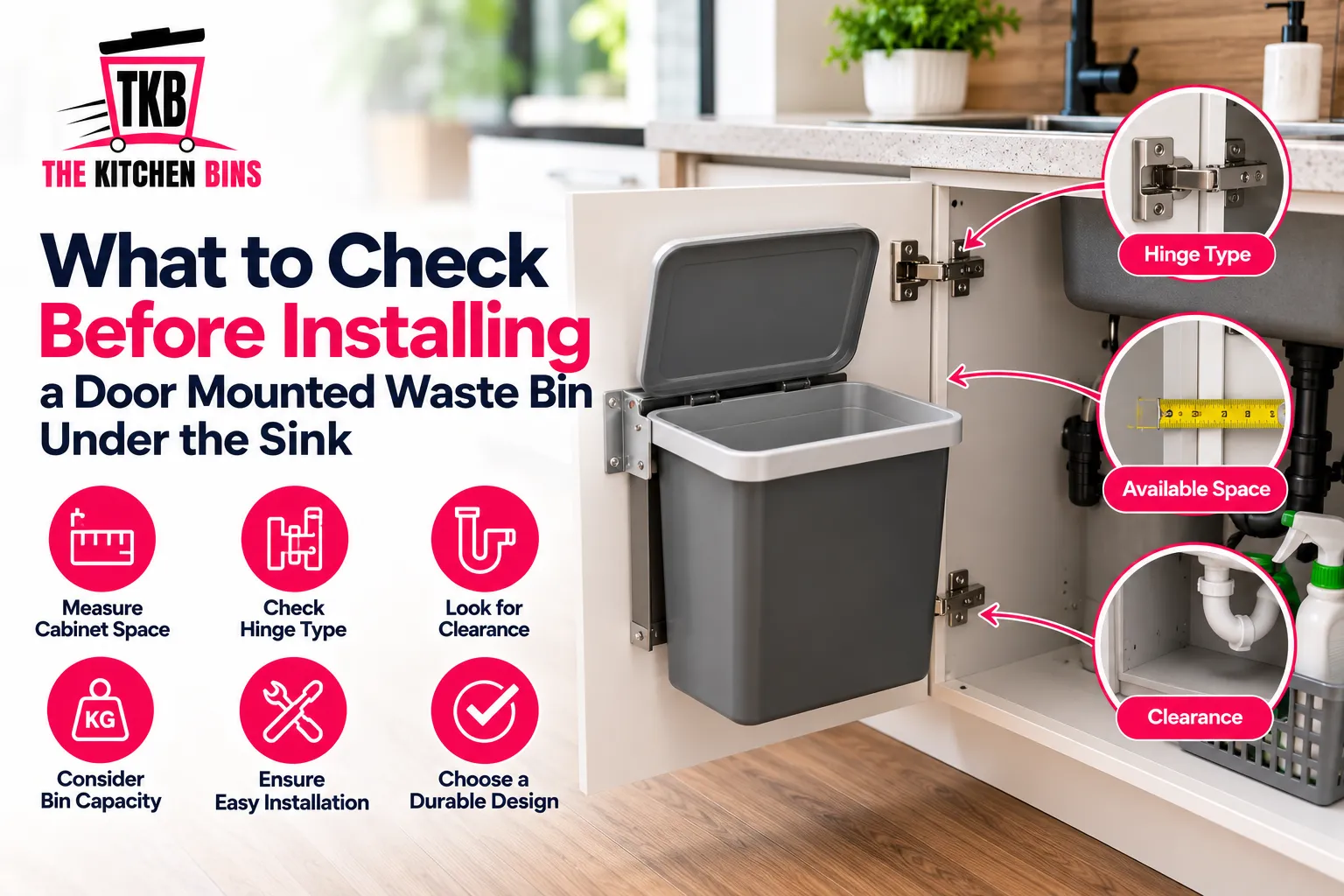
Measure the Cupboard, Not the Label
Cabinets are sold by nominal sizes such as 400mm, 450mm or 600mm, but side panels and hinges eat into the space inside. Measure:
-
Internal width at the front, middle and back, then use the smallest figure
-
Depth from the back of the closed door to the pipes or rear panel
-
Height from the cupboard floor to the underside of the sink bowl or trap
Height matters most when choosing an under sink door mounted bin. A bin that fits but can’t be lifted out past the sink quickly becomes a daily annoyance, so allow room for the lid to open and the bucket to come out.
Work Around the Plumbing
Waste pipes, flexible hoses, shut-off valves and water filters all compete for the same space. The bin shouldn’t press against any pipe or block access to valves and filter cartridges, because one day you’ll need to reach them in a hurry.
If an under sink door mounted bin only fits by moving pipes, a smaller or differently shaped bin is usually the simpler answer. Any genuine plumbing alteration should be done by a licensed plumber.
Check the Door, Hinges and Swing Path
A door that carries a bin takes its weight every time it opens, and a full bucket weighs far more than an empty one. Make sure the door is solid and in good condition, the hinges are firmly fixed and the supplied screws won’t break through a thin door face.
Then open the door slowly and picture the path the bin will take. Hinge arms, the neighbouring door, a dishwasher or an internal shelf can all get in the way. Testing the swing first saves you from filling holes later.
Door Mounted Bin or Door Mounted Pull Out Bin?
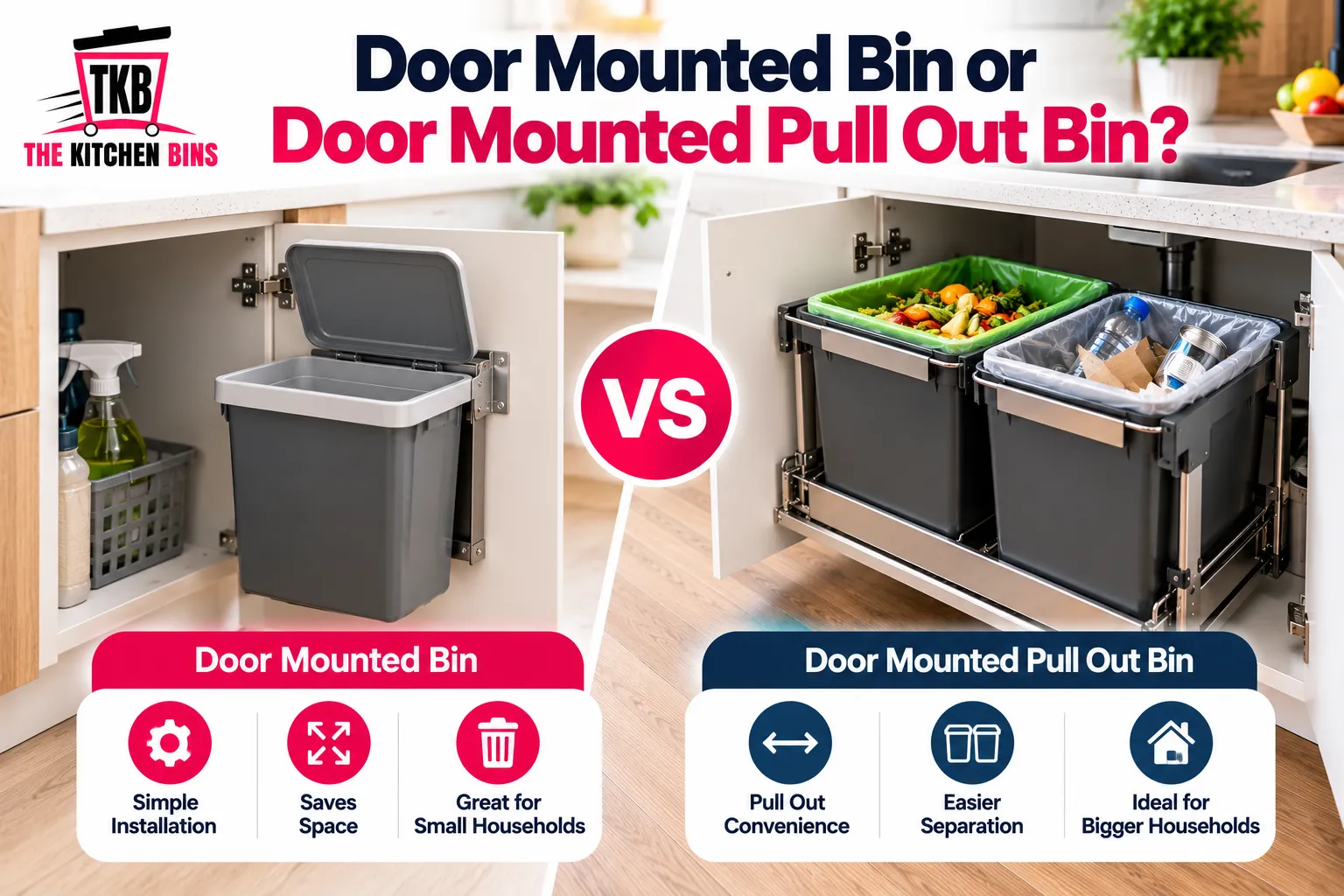
The two terms overlap, but the mechanisms are different.
|
Door mounted |
Door mounted pull out |
|
|
Carried by |
A bracket on the door |
Runners in the cabinet, linked to the door |
|
Movement |
Swings out with the door |
Slides forward as the door opens |
|
Key check |
Door strength and bracket position |
Runner and linkage clearance |
A door mounted pull out bin takes much of the weight off the door, while a direct door mount can suit cupboards where pipes crowd the floor. Kia Ora’s OPTIO twin bins, for example, can be fitted with an optional door-mount bracket.
Frequently Asked Questions
What are door bins?
Door bins are kitchen waste bins that attach to, or open with, a cupboard door. The bin stays hidden inside the cabinet and swings or slides out when the door opens. They’re a popular choice under the sink and in compact kitchens where there’s no spare floor space for a freestanding bin.
What are the three types of garbage bins?
The three main types of household garbage bins are general waste, recycling and organics. General waste goes to landfill, recycling takes accepted packaging such as paper and cardboard, and organics takes food or garden waste where your council offers it. Accepted items vary between councils. Inside the kitchen, the three common bin styles are freestanding, pull out and door mounted.
What is the best type of bin to use in a kitchen?
The best type of kitchen bin is the one that suits your cupboard space and the way you separate waste. Pull out bins work well in a spare base cupboard and can hold two buckets for rubbish and recycling. Door mounted bins suit crowded under-sink cupboards, while freestanding bins suit kitchens with floor space to spare.
How to attach a bin to a cupboard door?
To attach a bin to a cupboard door, follow the instructions for your specific model. The usual steps are:
-
Measure the cupboard and check the door’s swing path.
-
Hold the bracket or template against the inside face of the door.
-
Mark the fixing points and drill pilot holes if specified.
-
Screw the bracket on using the supplied fixings.
-
Clip or slide the bin frame onto the bracket and fit the bucket.
-
Open and close the door to check it moves freely.
Why Choose The Kitchen Bins?
-
A specialist range: door mounted, door operated, pull out and free-standing kitchen bins in one place
-
Shop by cabinet size: narrow the range by 400mm to 600mm cabinet widths before comparing litres
-
Spare parts on hand: replacement buckets for selected Wesco, Hailo and Häfele systems
-
Brands worth knowing: Kia Ora, Wesco, Hailo, Hideaway and Häfele
-
Simple ordering: free shipping over $200 and returns within 30 days
-
A cabinetry background: support to help you check the fit before you order
About The Kitchen Bins
The Kitchen Bins is the dedicated kitchen bin store of The Storage Shop, an Australian-owned storage business operating since 1992 and based in Lonsdale, South Australia. The Storage Shop was started by a cabinet maker who kept meeting homeowners who wanted a more practical kitchen without a full renovation, and cupboard upgrades such as under-sink bins became part of the answer.
That background is why the range can be browsed by cabinet width as well as capacity, brand and colour. Orders are delivered to customers across Australia, from compact apartments to busy family kitchens.